Guest Author Adam Keawe Manalo-Camp is a Kanaka Maoli & Filipino indigenous researcher
In Hawaiʻi, women were not merely companions to power — they were power. Only women could truly legitimize the aliʻi ʻai ʻāina, the ruling chiefs, because they embodied the pilina (sacred connection) between ancestors and descendants, between pō (night, origin) and ao (day, emergence) thus lines of chiefs were matrilineal.
The priestly calendar of Kalākaua’s Hale Nauā society did not measure time by the reign of kings but by the birth of Laʻilaʻi, the first woman, the generative womb of all chiefs.
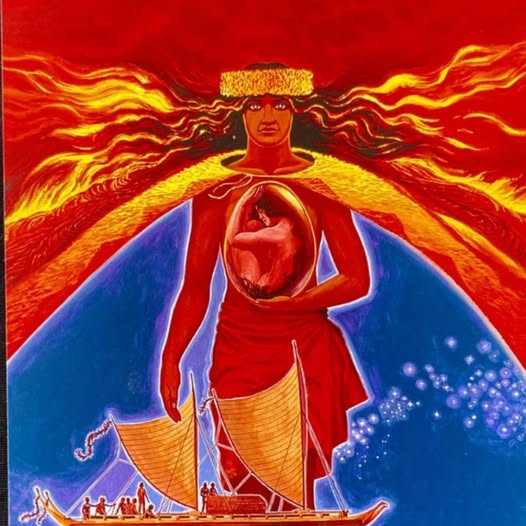
Even the word for womb, pūʻao (shell of light), speaks to the radiant, ancestral sanctity of female creation, echoed in the Kumulipo, where life spirals outward from the depths of pō. The most irreplaceable figures in the chiefly court were the wives, mothers, and sisters. They were not mere attendants but the foundation of dynastic legitimacy thus Kamehameha I had unions with many powerful chiefly women. The powerful position of kuhina nui — a premier balancing the king’s rule — was repeatedly held by women like Kaʻahumanu.
The arrival of Western traders and Calvinist missionaries violently collided with this Indigenous order. The patriarchy they brought sought to subordinate women and erase their political authority. When Kuhina Nui Kaʻahumanu tried to outlaw the trafficking of Hawaiian women in the 1820s, American and European sailors erupted in riots, demanding the “right” to access and exploit Native women’s bodies. The colonial project began by seizing women’s autonomy — their mana — and once Hawaiian women were turned into commodities, land followed.
In Hawaiian thought, land was never owned; the people belonged to the land, as children belong to a mother. Haumea, Papa, the divine earth mothers, could not be possessed. But when a woman could be made into property, so too could ʻāina. The dispossession of Hawaiian land was born from the dispossession of Hawaiian women.
So when we speak of sovereignty, of land back, of decolonization, we must center mana wāhine. There is no true aloha ʻāina without rematriation — the restoration of women’s role in land stewardship. To reclaim the land, we must also restore the honored place women held.